Wordpress What Rights Are Required to Upload Media User Role Editor
WordPress includes user roles and permissions settings that allow yous to specify the capabilities that users accept access to on your website. This gives you more than command over your website and improves your security. In this article, we'll look at each of the WordPress user roles to aid you decide how to fix your WordPress website for growth. We'll also see several ways to edit them and add your ain.
What are WordPress User Roles and Permissions?
A office is a user with certain capabilities. Permissions are the capabilities. WordPress has 6 pre-defined roles and over 70 capabilities. Each role adds to the capabilities of the roles under them. There are also ways to add new user roles and capabilities.
Why Manage WordPress User Roles and Permissions?
There are many reasons why it'southward important to specify user roles.
User roles assist improve your website's security. Someone who contributes content to your website shouldn't take the power to change your theme, add or remove plugins, perform updates, or even moderate comments. Y'all want those capabilities to be restricted to every bit few users as possible.
Utilizing the various user roles gives y'all a lot of control over the options each user has admission to. They allow you to build a team and limit their access, and so no one uploads media, posts content, or makes changes you lot haven't authorized.
Limiting user access can also streamline your workflow. Since users can just perform certain tasks, they're not distracted or dislocated by features they don't need.
Some plugins, such as security or eCommerce plugins, check the capabilities of users to restrict the actions they can perform. Certain user roles would not see the settings screen, for example.
Content tin exist restricted to certain user roles. This includes menu links, widgets, posts, etc.
A Await at the WordPress User Roles and Permissions
There are over 70 capabilities built into WordPress. There are two types:
- Primitive – these capabilities are assigned to the premade roles, and so users take them automatically.
- Meta – these capabilities are applied to archaic capabilities based on checks that WordPress performs.
There are 5 roles built into WordPress, plus one that'due south just seen in multisite installations, for a total of 6 user roles. The roles are:
- Subscriber
- Correspondent
- Author
- Editor
- Administrator
- Super Admin (multi-site but)
The simply user part that your WordPress website must have is Admin. This role is created automatically when WordPress is installed (unless it'southward a multisite, then the Super Admin is created).
You can add together more with custom post types, such every bit students, teachers, shop vendor, shop worker, customer, etc., by installing plugins such as WooCommerce, LifterLMS, and lots more.
Each of the roles has a specific prepare of permissions (the features they have access to). Let's look at each user role from the lowest level to the highest.
Subscriber
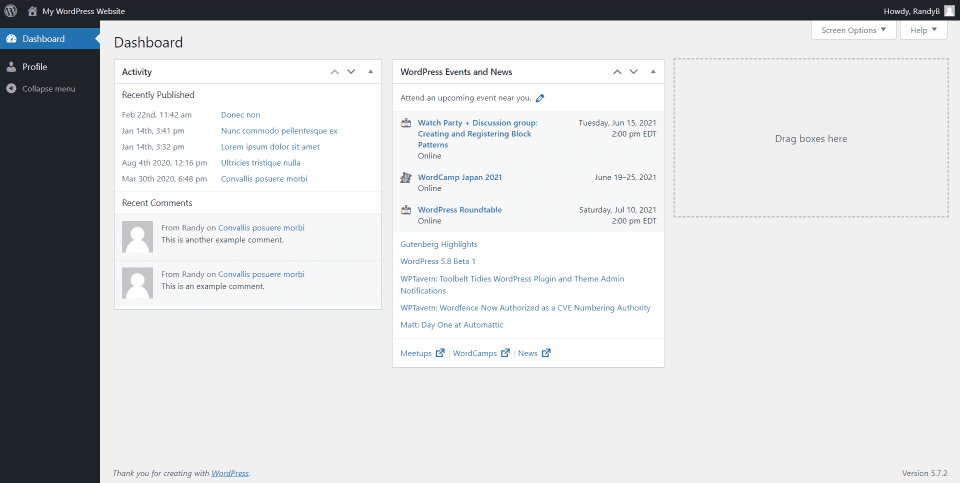
Subscribers can create a user profile, access private content, exit comments without having to re-enter their data, change their password, and receive notifications. Subscribers cannot create content. They do have access to the dashboard, but it'south express.
This is the most limited role and it'south useful if users take to log in to see the content or get out a comment. The Subscriber office is especially helpful for membership sites where users must sign in to meet the content.
Every bit you can see in the instance above, Subscribers accept admission to their profile in the dashboard. The dashboard will also testify them Activity (what was recently published and recent comments) and WordPress Events and News.
Contributor
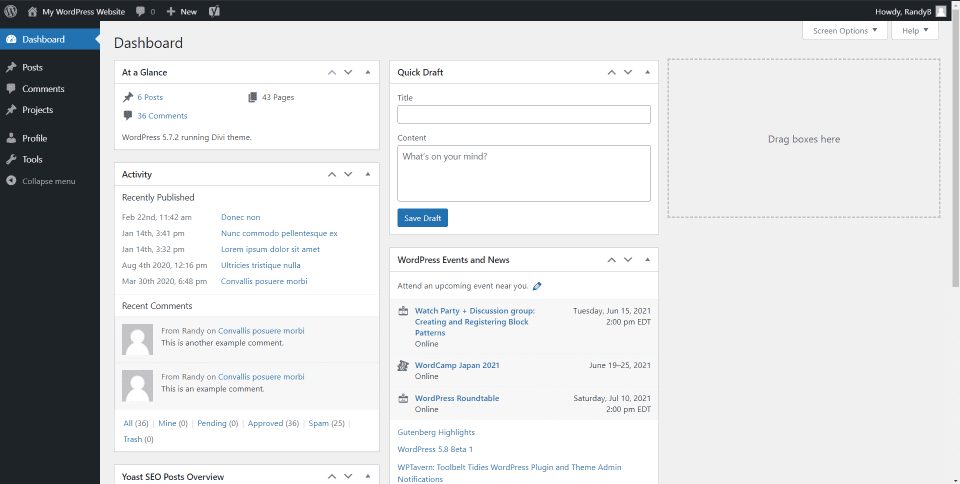
Contributors include the aforementioned permissions as Subscribers, and they can edit or delete posts and read re-usable blocks. They tin't upload media or publish posts, simply they can cull from existing categories and add together tags.
They can view pending comments, but they can't moderate them. The Contributor office can exist a little inconvenient since they tin't upload images for their content. This role is platonic for new and invitee writers.
As you lot tin can come across in the example above, the dashboard for Contributors shows posts, comments, projects, profile, and tools.
Author
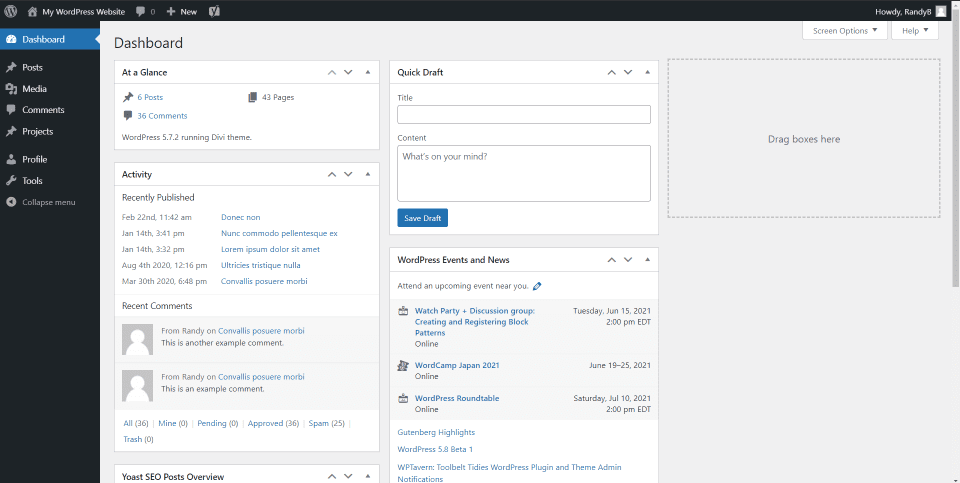
Authors include the aforementioned permissions as Contributors, but they can upload media, publish, edit, or delete their own posts. They can also create reusable blocks and edit or delete their ain blocks.
They take command over their own content. This makes them much more convenient since an admin doesn't have to upload media for them. It can be a little risky, though, because they can delete their posts fifty-fifty later they've been published. Other than that, this is a safe function.
The example above shows the dashboard for Authors, which includes posts, media, comments, projects, profile, and tools.
Editor
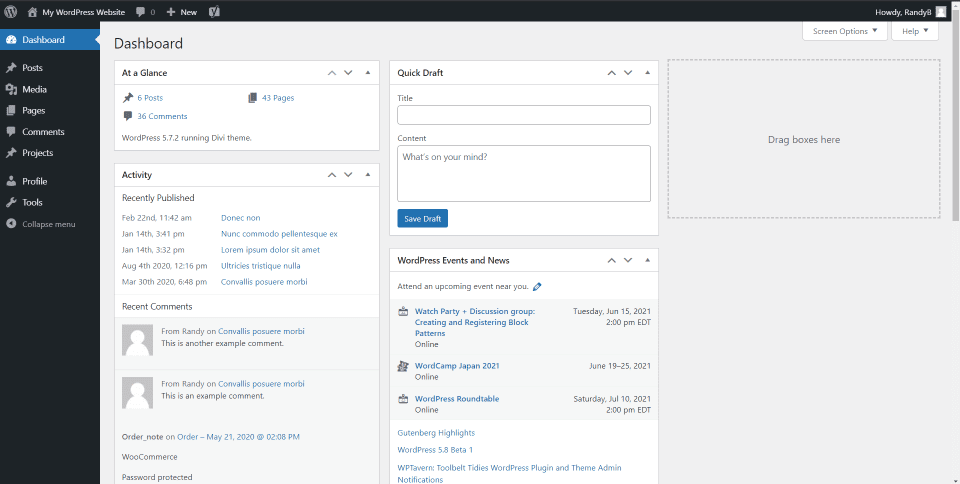
Editors have the same permissions as Authors, simply they tin edit and publish posts past other users. They have full access to the content sections of your website and can edit or publish pages including individual pages and posts created by others.
Editors can manage categories and moderate comments. They cannot access website settings, themes, or plugins.
The example above shows the dashboard that Editors will come across. Menu items include posts, media, pages, comments, projects, profile, and tools.
Administrator
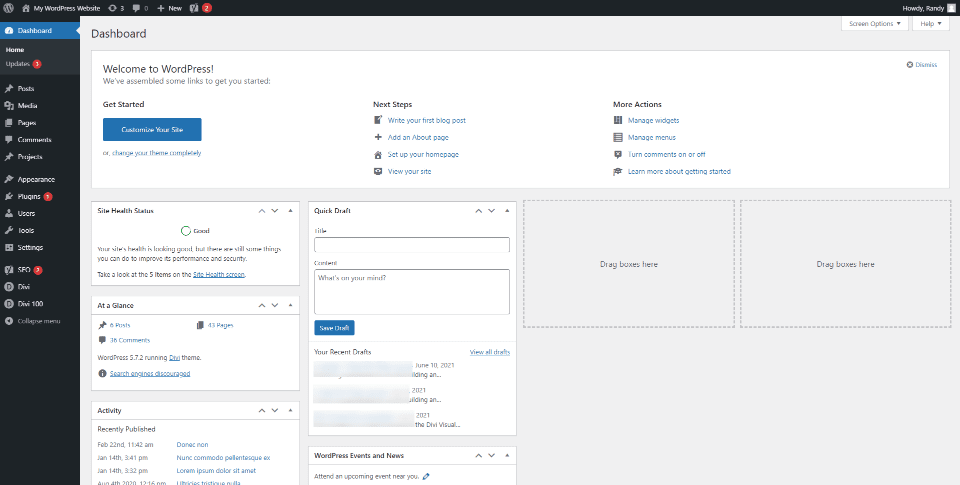
Administrators accept total access to the backend. This is the most powerful of the WordPress User Roles for the standard WordPress installation. They tin can create and edit pages and posts, accommodate WordPress settings, install themes and plugins, edit lawmaking, command user permissions, and more. They tin can import and export content, manage the website options, and edit the dashboard.
An Admin tin change the user role of other admins, including deleting them. This function is typically reserved for the site owner or manager.
The prototype to a higher place shows the Administrator has access to everything from the WordPress dashboard. This is the only image and so far that shows updates are available, and all examples are from the same test website.
Super Admin
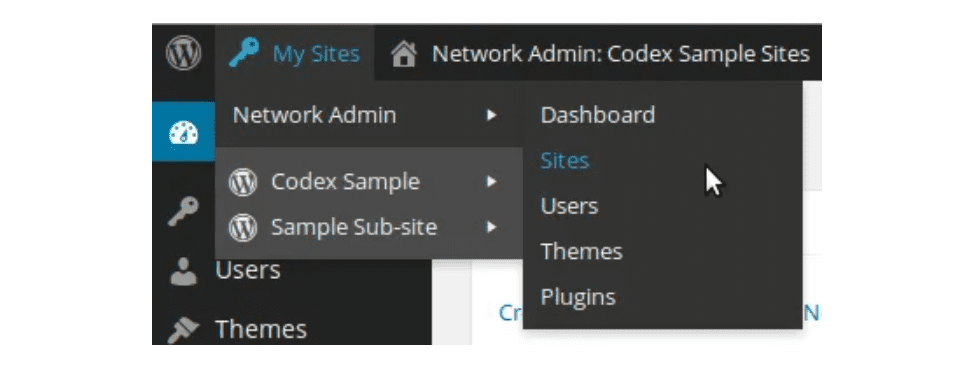
The Super Admin is only available for multisite networks and information technology's the almost powerful WordPress role. A multisite is a WordPress website that controls multiple websites on the network. This ways Super Admins have control over multiple WordPress websites at once, including their Administrators.
Super Admins have the aforementioned permissions as an Ambassador, but they have control over the entire network. They tin create, edit, and delete websites on the network.
Several of the Administrator tasks are moved to the Super Admin. Regular Administrators no longer accept access to upload, install, or delete plugins or themes. Besides, Administrators no longer have access to modify user's information.
They have control over which sites on the network have access to which themes and plugins. They tin can perform updates across the network simultaneously. Super Admins install plugins and themes, and the Administrators of each WordPress website on the network have control of activating them.
Multisites have an additional admin panel that merely Super Admins accept access to. Equally yous can see from the paradigm above (taken from the WordPress glossary), the Super Admin dashboard includes a Network Admin card that shows the sites on the network, users, themes, and plugins. Everything else matches the Ambassador dashboard.
Assigning User Roles
When assigning user roles, apply the Principle of Least Privilege (PLoP). This gives users only the permissions they demand to perform their tasks and ensures they don't have access to features they shouldn't.
The ability to assign user roles fits this principle well because you can assign them based on each person's task description. You can have senior staff, junior staff, interns, guest authors, etc., and each has the specific access they need for their job.
This gives y'all more control over your WordPress website and keeps users from making changes yous don't want them to make. This also keeps users from changing the settings by accident or performing an update that you were not ready for.
If you lot run a website with a team of content creators, the site should accept one Administrator that manages the website, have an Editor to assist manage writers, and the other users as Authors. This allows them to upload media and is a proficient choice if y'all publish articles with lots of images. New writers and guests should exist Contributors. This gives you the all-time remainder of control.
Manually Add together New Users
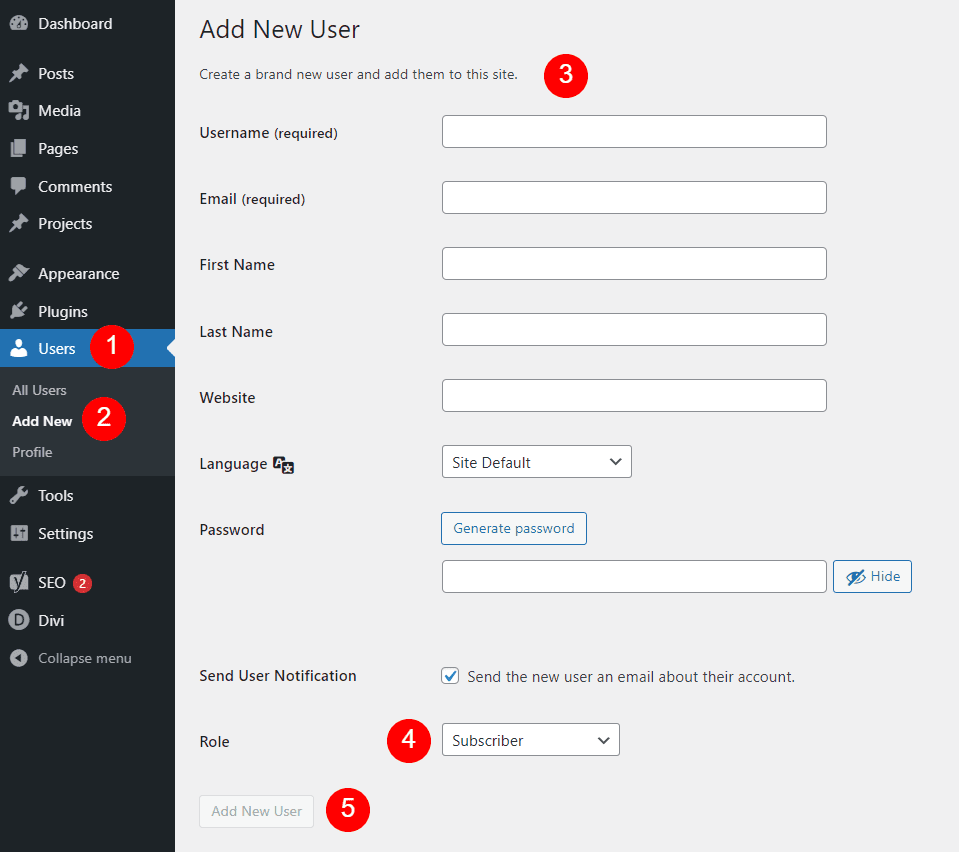
The Administrator tin add new users to the website. In the dashboard bill of fare, get to Users > Add New. Fill in the user's information, select a language (if you're not using the default linguistic communication), generate a password, check the box to send them an email notification, and select the user's role from the dropdown box. When you're ready, click Add new User.
The user will receive an e-mail at the address you entered for them. The email will include login data.
Changing User Permissions
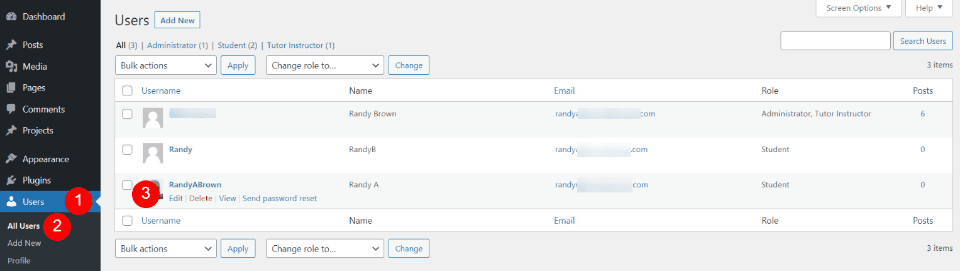
The Admin can besides change the permissions of current users. Go to Users > All Users in the WordPress dashboard. You'll see a list of users. This list works the same as whatsoever post type. Here, you can edit, delete, view, perform bulk actions, add new, etc. Hover over the user you want to edit and click Edit in the card items that appear.
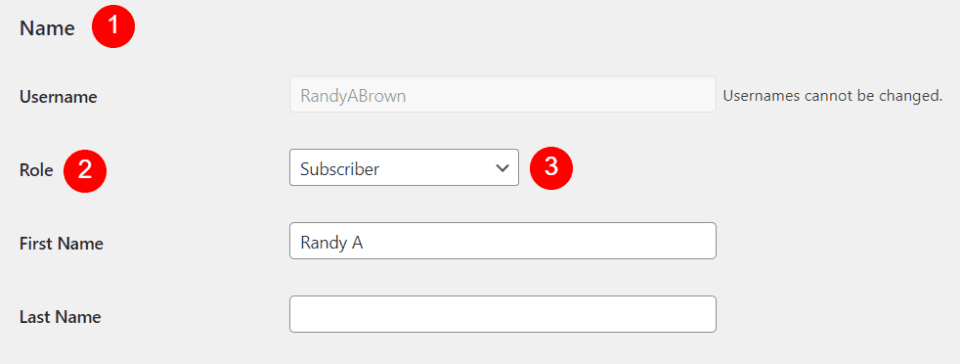
Scroll until you see a section chosen Name. You'll see a dropdown box labeled Office. The box will testify the current level for that user. Select this box to open information technology.
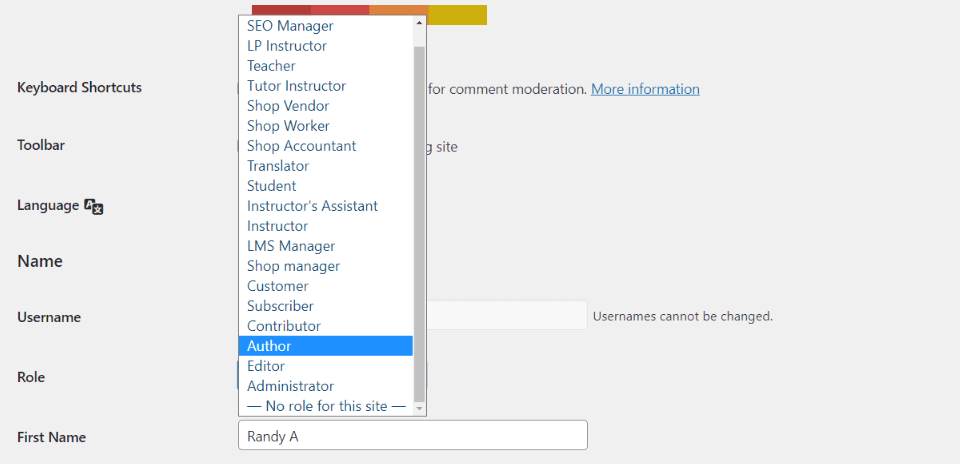
Select the user level you lot want to assign to that user. Every role you've installed on your website from third-party plugins will be available to choose from, so your choices might await dissimilar from mine. Curlicue to the bottom of the page and click Update User.
User Registration and Default User Function
There are times when you want users to be able to register to your website. This is helpful for eCommerce, learning platforms, membership sites, and more than.
Y'all can allow users to register and ready the default user role for them. In the dashboard card, go to Settings > General. Check the box labeled Anyone tin register. Nether this is a dropdown box where you can choose the default office that volition be assigned to all new users.
Subscriber is the default setting, but you can ready this to any role yous want, such as pupil, member, etc. I don't recommend setting the default to anything above Subscriber (or the equivalent for your website). You don't want to provide admission to your website to anyone y'all don't know.
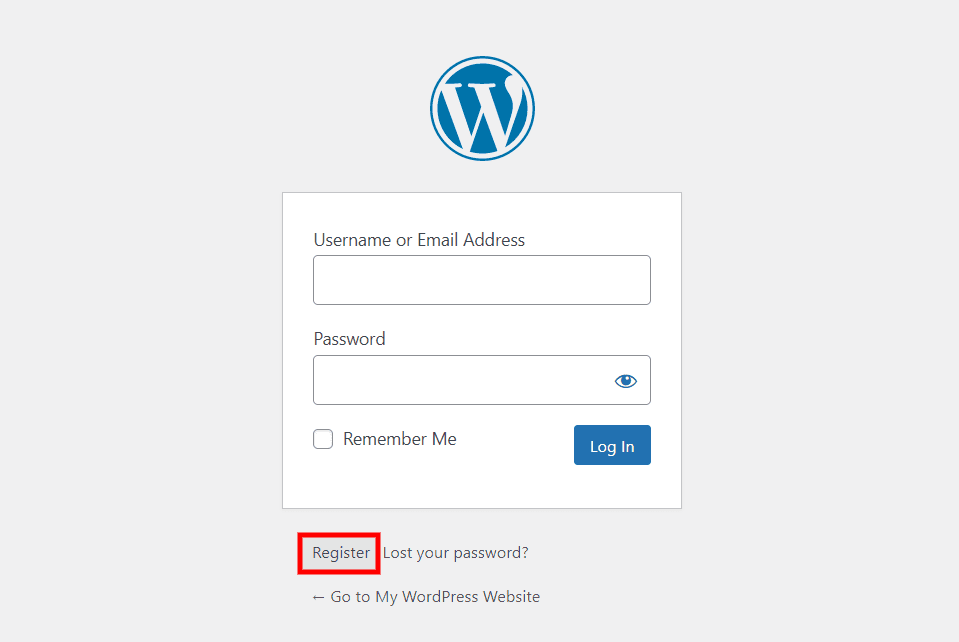
Register is now an selection at the login screen.
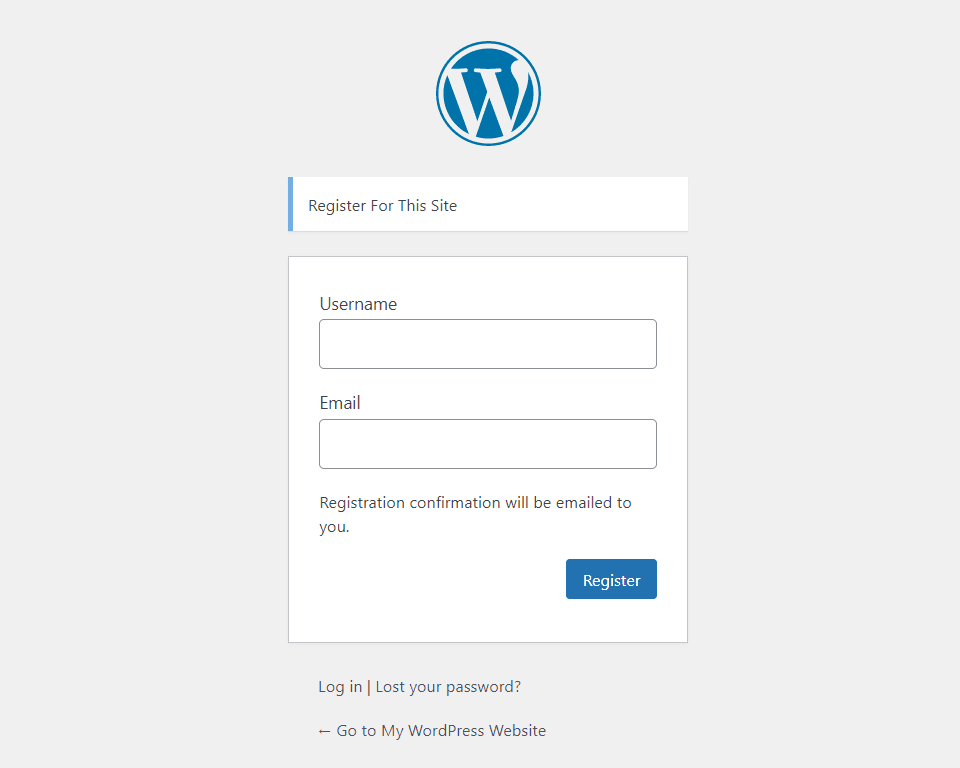
One time your visitors click Register, they'll see the login grade where they can enter a username and email. In one case they click Annals, the confirmation volition be sent to the electronic mail they entered. They'll exist registered with the default user role.
If you want users to register, you might consider placing a link equally a call to action in your menus or on your website to inform your visitors that information technology's an option.
Edit WordPress User Roles and Permissions with Plugins
There are a few concerns with some of the abilities sure user roles take. For example, Contributors tin can't upload images and Authors tin delete all their content. Fortunately, it's possible to fine-tune user's capabilities by using plugins. Let's wait at a few of the most popular options.
i. Members
Members gives you the tools to edit the capabilities of roles and create new roles. You can also delete roles. Users can be assigned more than 1 role. Content restrictions let you to specify which roles can admission the content.
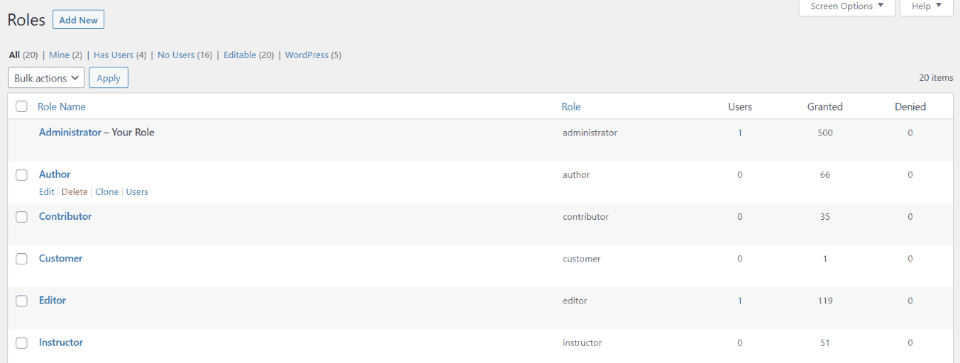
Roles displays each of the roles on your website. You lot tin edit, delete, clone, and view the users with each role.
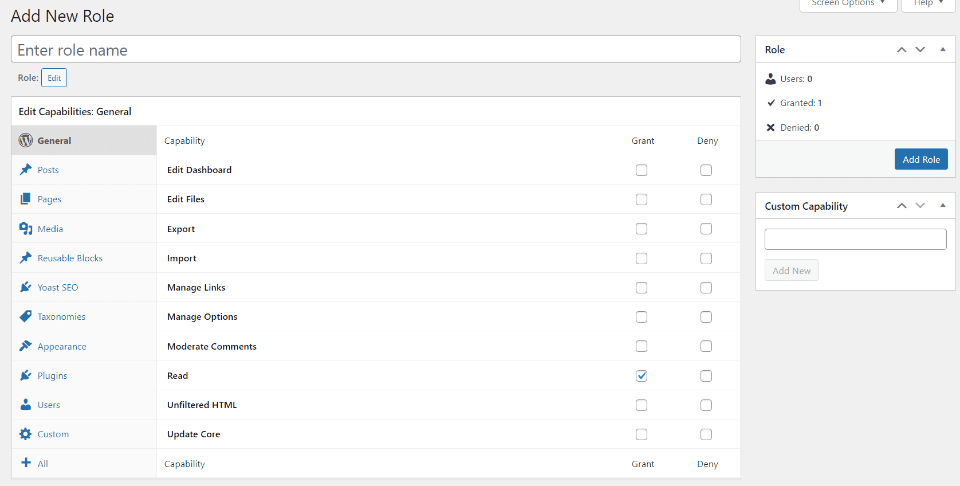
Creating new members gives you an editor where you can select every capability for every job. It includes plugins that you have installed, such as Yoast in the example.
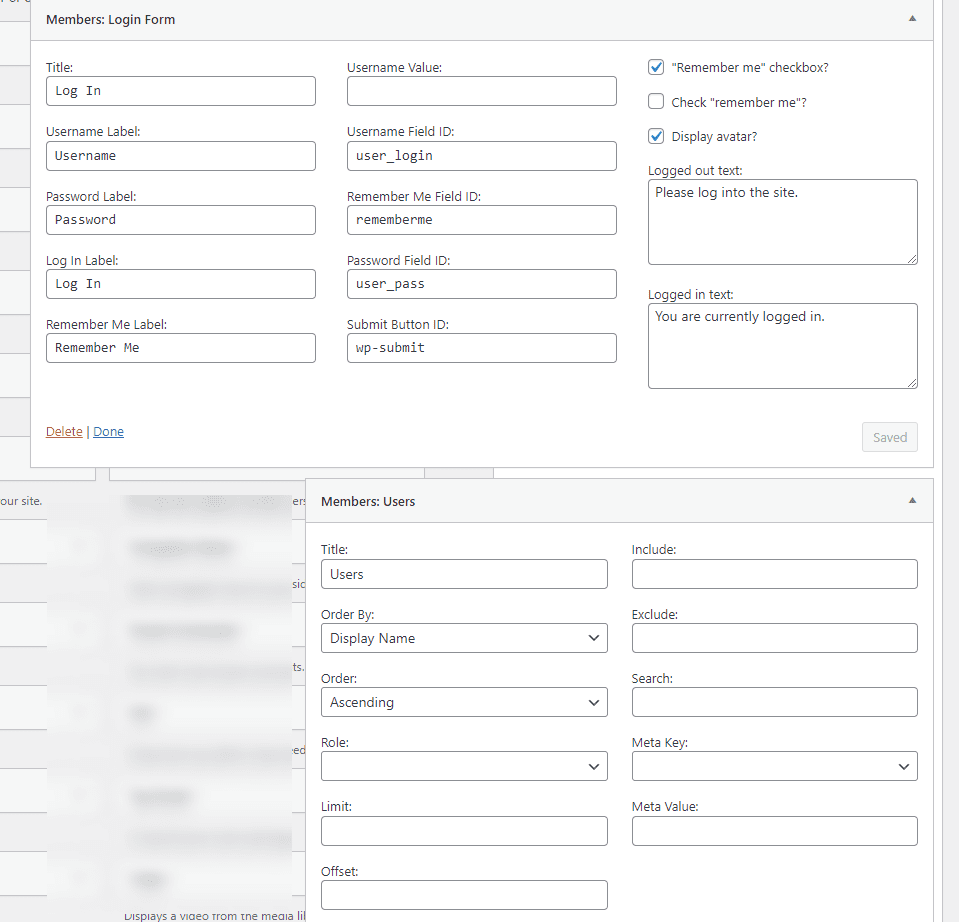
Ii widgets are included for your sidebars where y'all tin can show a login form and a user's list. You take control over the course and data that displays.
Price: Complimentary | More Information
2. Ultimate Member

Ultimate Fellow member gives you lots of customization options for frontend forms and profiles. Design with the drag-and-drop architect and add provisional logic and conditional navigation menus. Customize user roles and create user directories. Yous can restrict content based on the user roles. Create a membership site and display member search in the sidebar.
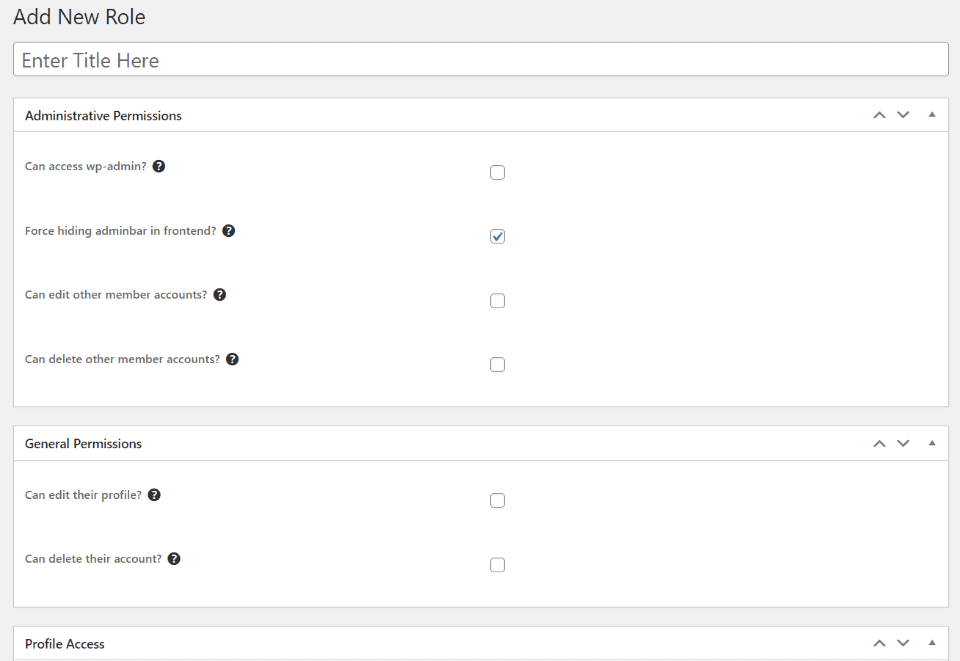
Creating new user roles provides y'all with detailed options that include administrative and general permissions, contour access, homepage options, login, logout, and delete options.
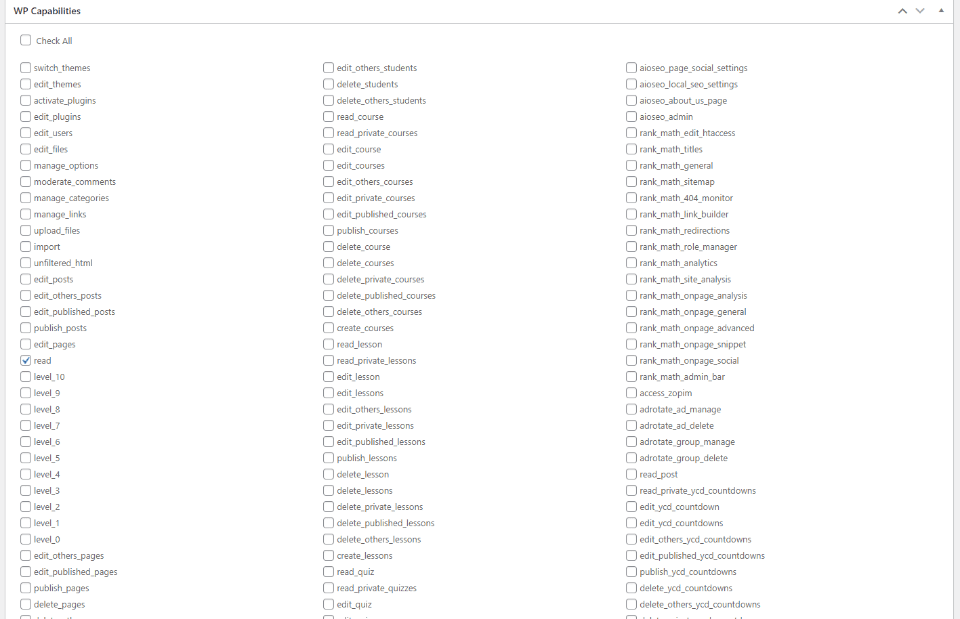
The listing of capabilities is massive. Select the capabilities you want the user role to include.
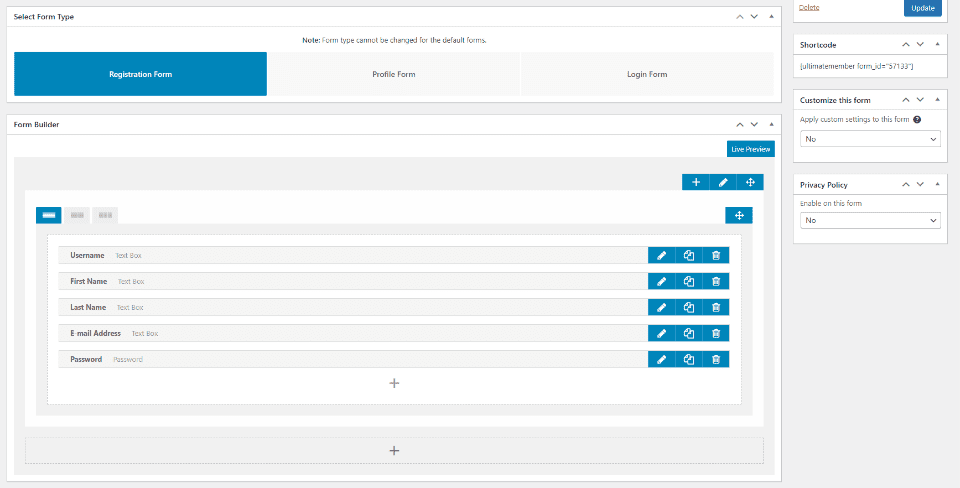
The elevate-and-drop form builder includes several forms to get you started.
Toll: Free | More Information
3. User Role Editor

User Function Editor provides a unmarried dashboard to customize and create new roles and capabilities. All options are selected with checkboxes. Yous tin assign capabilities for each user and you lot can assign multiple roles to each user.
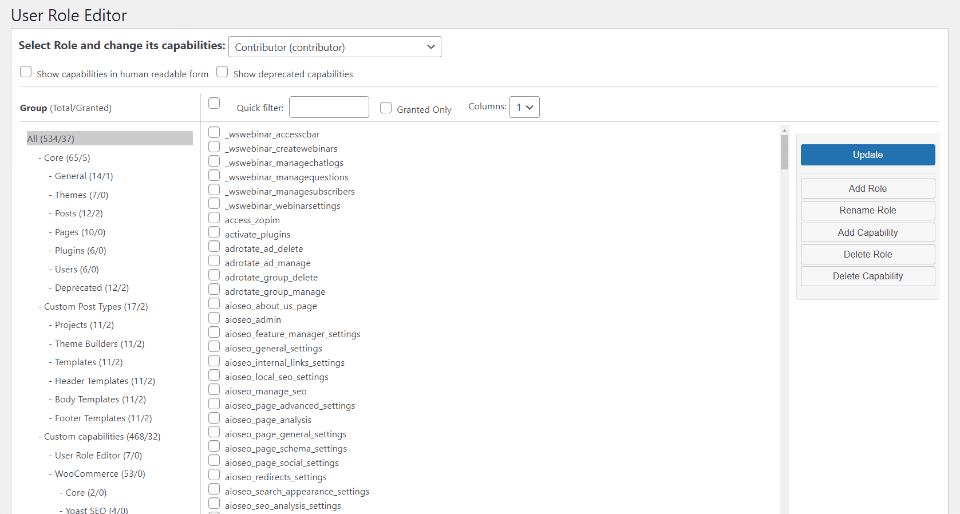
The editor makes information technology easy to edit the capabilities of any role. Select the options yous want by clicking them.
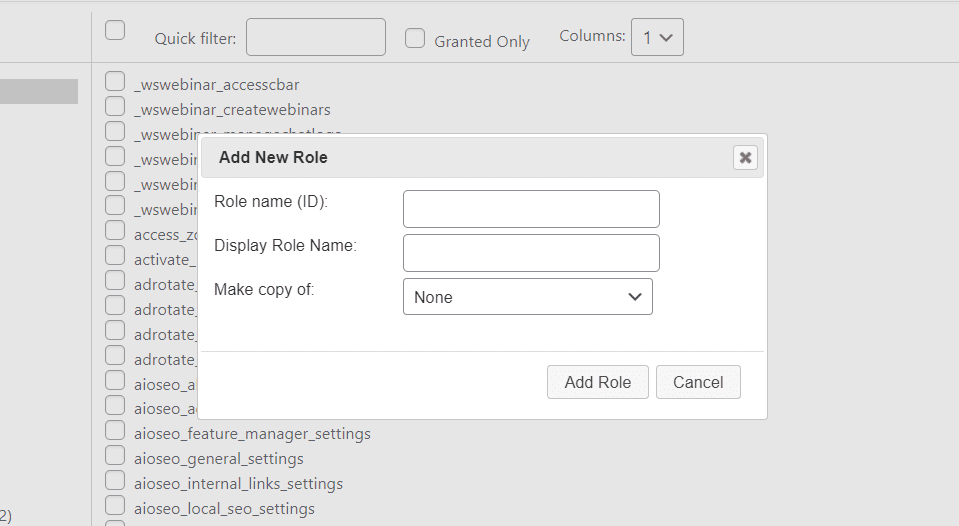
Add together a role by creating it from scratch or copying some other function.
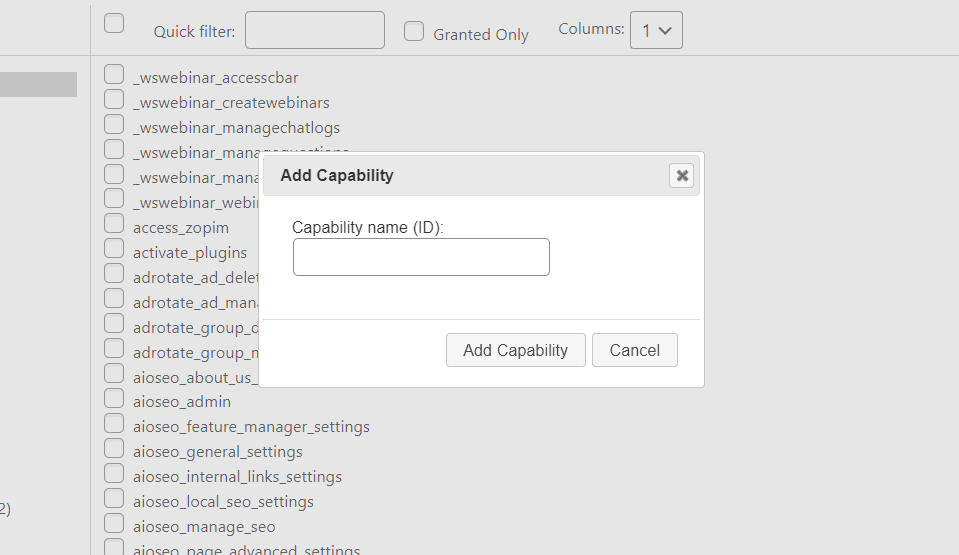
Add new capabilities that any function tin can utilise.
Cost: Gratuitous | More Information
4. PublishPress Capabilities
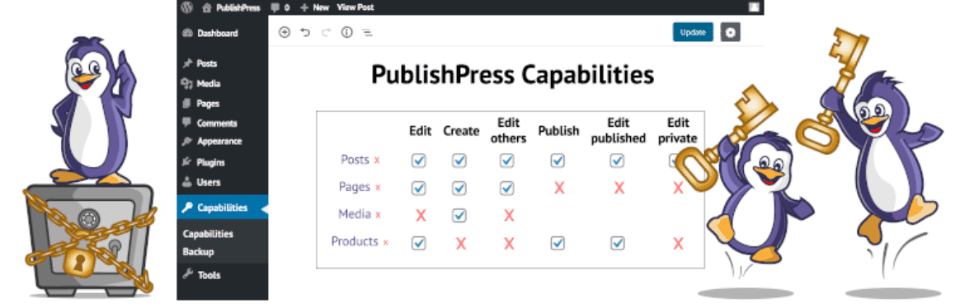
PublishPress Capabilities lets you create custom user roles and select the capabilities for each role past choosing them from a listing. You have total control over every permission. You lot likewise take control over taxonomies. Create new roles from scratch, clone a function, or edit a current part.
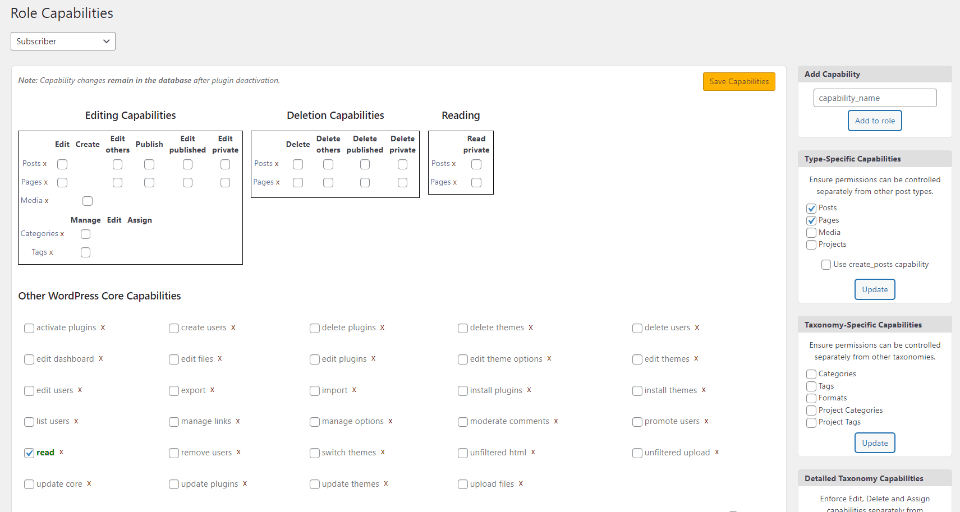
Select the capabilities yous want each role to take. Choose editing, deletion, reading, other WordPress core, and additional capabilities. The additional capabilities provide a massive listing of options. You can add a capability, fix them as type-specific, taxonomy-specific, etc.
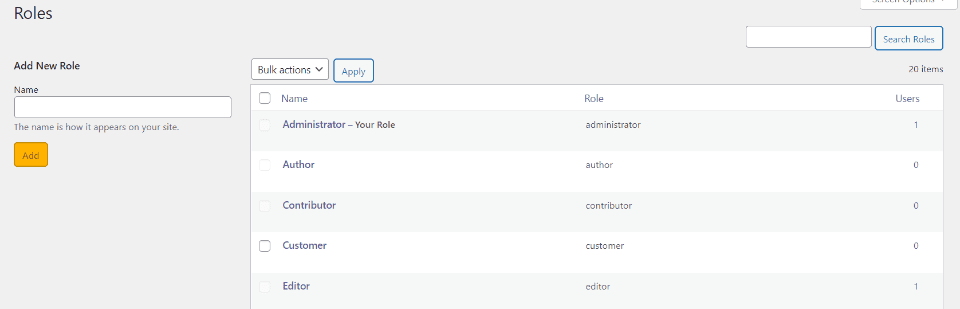
Add together a new role just by entering the name. Yous can then edit the capabilities of that role.
Price: Free | More Information
5. Advanced Admission Manager

Advanced Access Director lets you lot manage access to your content for any role, This includes individual users and visitors. You lot tin can likewise define the default access to pages, posts, categories, custom mail types, and custom taxonomies.
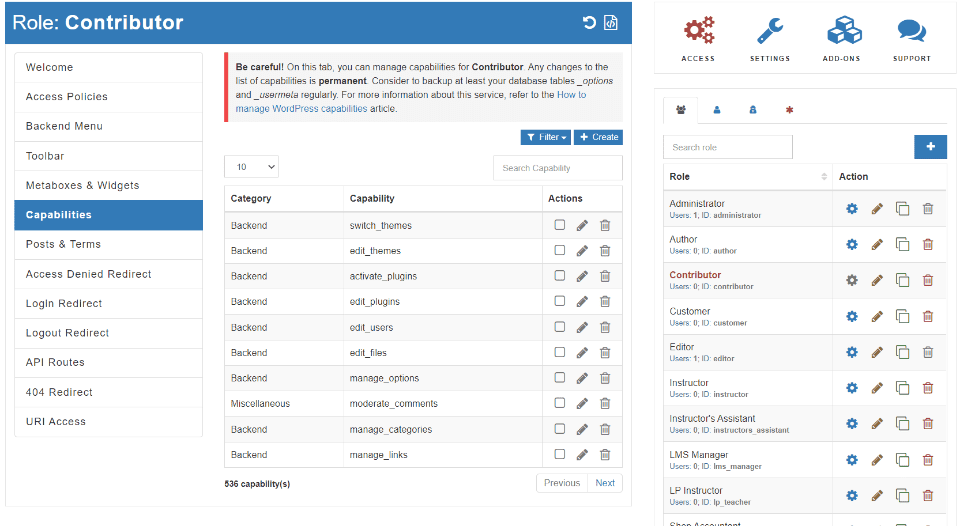
The admission settings screen provides the listing of users and actions. Manage, edit, clone, or delete whatsoever role. Select user roles, individual users, visitors that are not logged in, and default access.
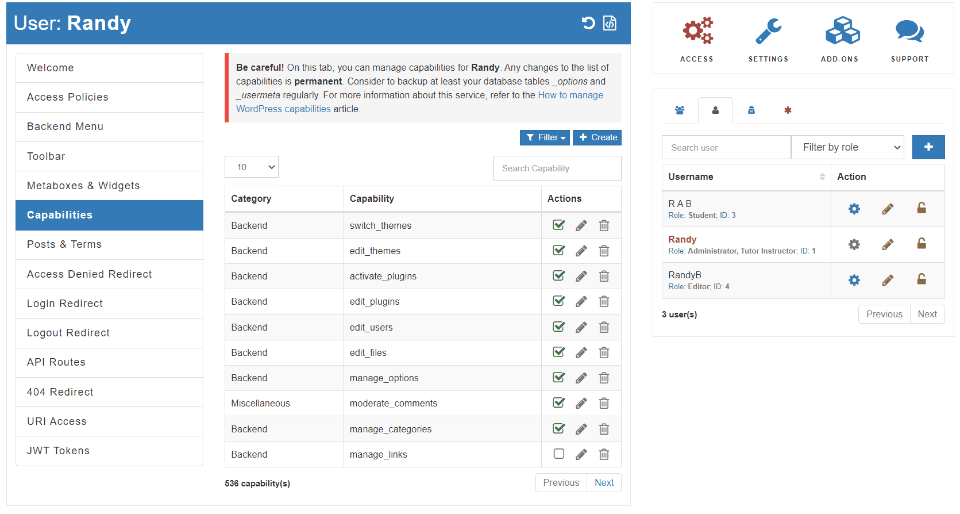
Yous tin can arrange the capabilities of each user individually.
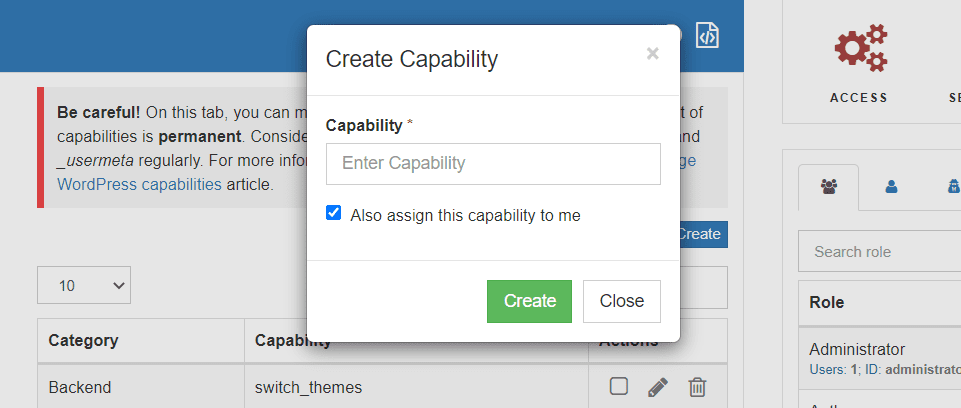
Create new capabilities for any part.
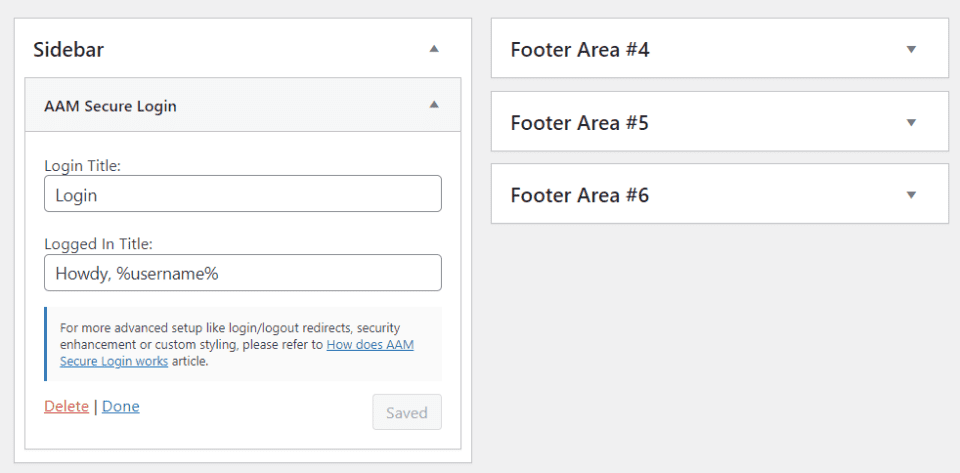
Information technology includes a custom login widget for your sidebars.
Price: Gratis | More than Information
Other WordPress Roles and Permissions Plugins
Here are a few more to consider:
- WPFront User Role Editor
- View Admin Equally
Edit WordPress User Roles and Permissions with Code
Even though the six roles have pre-divers capabilities you tin can add or remove those capabilities manually with lawmaking. I only recommend using code if you're comfortable with using PHP. I recommend near WordPress users use a plugin for this.
Decision-making WordPress roles and permission with code can be cleaner and lighter weight than plugins and you don't accept to worry most updates.
Adding, Removing, and Cloning Roles
Rather than customizing a current role, it's sometimes more beneficial to create a new role.
Roles tin exist created and removed using the add_role() and remove_role() functions.
For instance, this code adds a role called Invitee Contributor along with the capabilities:
add_role( 'guest_contributor', 'Guest Correspondent', assortment( 'read' => true, 'edit_posts' => true, 'delete_posts' => truthful, ) );
This code removes the Contributor role:
remove_role( 'contributor' );
To clone a current user role, use this lawmaking:
add_role( 'clone', 'Clone', get_role( 'user_role_name' )->capabilities );
Supplant 'clone' with the name you want the new user part to take. Replace 'user_role_name' with the role y'all want to clone. This provides yous a new role that matches the capabilities of another role. You can then modify the capabilities of the new role.
Add or Remove Part Capabilities
You tin can customize existing role capabilities with the add_cap() and remove_cap() methods of WP_Role class object.
This code gives the Editor the capability to activate plugins:
// Become the editor part object. $role = get_role( 'editor' ); // Add power to actuate plugins. $part->add_cap( 'activate_plugins' );
This code removes the capability of deleting posts from the Author user role:
// Get the author office object. $role = get_role( 'author' ); // Remove deleting posts capability. $role->remove_cap( 'delete_posts' );
Add together or Remove Specific User Capabilities
Yous tin also customize capabilities for specific user with the add_cap() and remove_cap() methods of WP_User class object.
For example, this lawmaking gives the user the capability to switch themes and remove the capability to manage categories:
// Get the user object by user ID. Y'all can also go user object by slug, email address, or login proper name. $user = get_user_by( 'id', ane ); // Add power to switch themes. $user->add_cap( 'switch_themes' ); // Remove manage categories capability. $user->remove_cap( 'manage_categories' );
Tips for Setting WordPress User Roles and Permissions
Here are a few tips for setting WordPress user roles and permissions.
1. Ready the default user office as depression as possible.
It'due south set to Subscriber by default. I don't recommend irresolute it unless it's completely necessary for your specific website's needs, such every bit a custom post type. Fifty-fifty then, I recommend using the lowest role possible.
2. Select the role for each user based on the level of access they demand.
Requite users the lowest level possible. This reduces the number of users with higher levels of access, which streamlines their jobs and increases security.
This also keeps users from making unauthorized changes such as deleting content, customizing code, changing themes, adding or deleting plugins, etc.
It's much safer to give users a lower role and increment information technology as you demand to than to give them a higher role and regret it because of a mistake or something worse. Only give college roles to those you fully trust.
iii. Have the fewest number of Administrators possible.
The fewer people that have admission to themes, plugins, and other settings the better. Ideally, a WordPress website would take ane Ambassador.
As well, have a few Editors with the residue assigned as Authors or Contributors. The Author function is great for those you lot've worked with long enough to trust their piece of work. The Contributor role is a great choice for new content creators.
4. For a i-person website, create an Editor role for yourself.
Creating an editor office keeps the administrative tasks dissever from the daily blogging role. The Administrator username wouldn't be every bit visible on the site, which helps keep information technology condom from hackers. Even if the Editor role is hacked, the Administrator role remains safe.
5. Fine-tune user roles with code or plugins.
The standard user permissions are helpful for most websites, but y'all may need to customize a function or create new roles. For example, you might want someone to have access to upload media, but not be able to publish or delete their content.
This can be done with code, simply plugins make this every bit easy as possible. The plugins we've covered in the commodity provide the best options. I recommend looking at each i to see which has the features that best fit your needs.
Use code only if yous're comfortable with PHP. Lawmaking does have the reward of streamlining the code to the exact features you want. This makes the code lighter. Also, you never take to worry about updating a plugin, the plugin's features changing, or the plugin no longer being supported.
Ending Thoughts on WordPress User Roles and Permissions
WordPress user roles and permissions are an important part of your website's settings. They give you more control over who has access to what features. This helps you manage your team and opens the possibility of growing your squad and so others tin perform certain actions, create content, etc.
Since the user's merely take access to certain features, user roles assist streamline each user's work. These restrictions likewise amend your website'due south security considering information technology limits what each user can do.
WordPress user roles and permissions can be customized with plugins or code, giving you even more control over each user.
User roles are like shooting fish in a barrel to understand and use. Having a good understanding of WordPress user roles and then choosing those roles carefully will help your website exist more than efficient and secure. If you lot have a WordPress website with more than than one user, you should fix upwardly WordPress user roles.
We want to hear from y'all. Do you utilize WordPress user roles and permissions on your website? Let us know near your experience in the comments below.
Featured Image via olesia_g / shutterstock.com
Source: https://www.elegantthemes.com/blog/wordpress/wordpress-user-roles-permissions
0 Response to "Wordpress What Rights Are Required to Upload Media User Role Editor"
Enregistrer un commentaire